

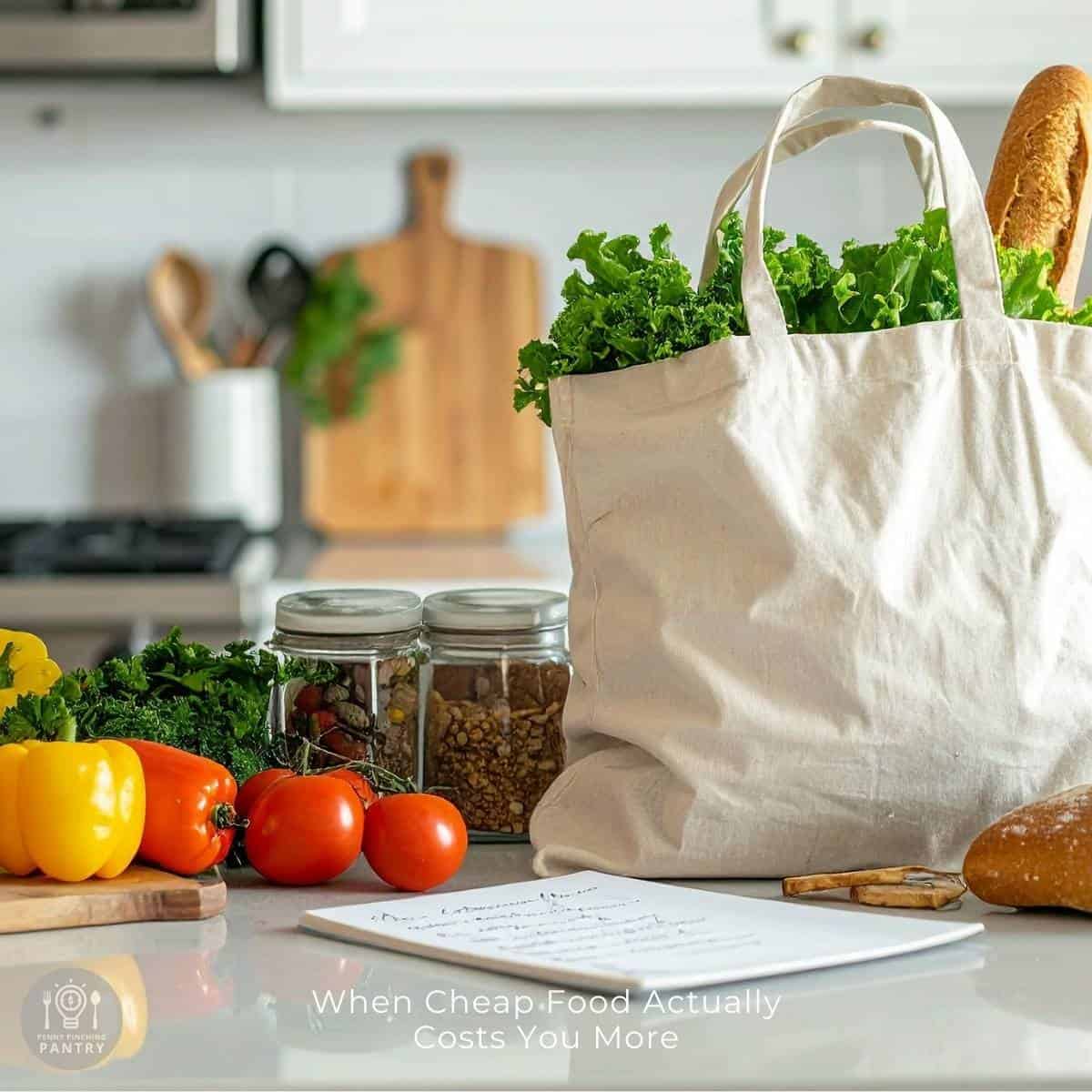
We all love a good deal! Finding a low price at the grocery store can feel like a win before the food even makes it home. But here's the thing most of us learn the hard way: not all cheap food actually saves money.
Some of the most tempting budget buys end up costing more in wasted food, extra trips to the store, or meals no one is excited to eat. Saving money on groceries isn't just about the lowest price. It's about value, usability, and what actually works in real life.
Have a question about this article? Ask AI!
Let's look at some common traps where cheap food ends up costing you more, and how to shop smarter instead.
Jump to:
Cheap produce that goes bad too fast
A rock bottom price on fresh berries or delicate greens looks amazing until they turn into a science project in the back of the refrigerator two days later. Pre-cut vegetables are another big offender. Once they're sliced, the clock starts ticking fast!
The hidden cost:
If you don't have a clear plan to prep and eat those items right away, that 'deal' often ends up in the trash or compost.
What to do instead:
Focus on long-haul produce. Cabbage, carrots, onions, potatoes, and apples can last for weeks when stored properly. And when in doubt, go frozen! Frozen vegetables are picked at peak freshness, don't rot, and let you use exactly what you need.
Cheap food isn't a bargain if it goes bad, gets wasted, or leaves you hungry an hour later! Real savings come from buying food you'll actually use, enjoy, and finish.
Bulk food you never finish
Buying in bulk is often seen as a money-saving strategy, but it only works when it matches how you actually cook and eat. That five-pound bag of a specialty grain or giant container of something you rarely use is only a bargain if it gets finished.
The hidden cost:
Bulk items can go stale or lose flavor before you use them up. They also take up valuable pantry space, making it harder to see and use what you already have.
What to do instead:
If you're trying something new, start small. Paying a little more per ounce for a standard size is still cheaper than spending big on a bulk item that sits untouched for months.
Bulk ingredients make sense when you use them regularly, and recipes like my Instant Pot Lentil Soup are a great example of how affordable staples can turn into a hearty, no-waste dinner!
Ultra cheap convenience food
Frozen burritos, boxed snack packs, and instant meals often look budget friendly at first glance. But when you look closer at portion sizes and ingredients, the savings don't always add up.
The hidden cost:
Many of these foods don't keep you full for long. If everyone is hungry an hour after dinner, you'll likely spend more on extra snacks or another meal.
What to do instead:
Think about foods that actually satisfy. Simple staples like beans, eggs, oats, rice, and potatoes take a little prep but stretch further and cost much less per serving.
This is why simple, filling meals like my 4 Ingredient Potato Soup are such a smart choice because they rely on inexpensive pantry staples that actually satisfy and get eaten!
Low quality meat that shrinks or dries out
That super cheap package of ground meat or chicken can be deceiving. If you've ever ended up with a pan full of liquid while cooking, you've seen this in action.
The hidden cost:
When a one-pound package cooks down to a much smaller portion, your true cost per serving jumps quickly.
What to do instead:
Look for value instead of just the lowest price. Chicken thighs are often cheaper and stay juicy, even as leftovers. Tougher cuts with good marbling can be budget friendly too and shine when cooked low and slow.
Buying ingredients for one recipe only
We've all done it. A recipe sounds affordable until it requires a specialty sauce, spice, or paste you'll only use once.
The hidden cost:
That five or six dollar ingredient isn't cheap if most of it expires in the refrigerator.
What to do instead:
Build a flexible pantry with ingredients that work across many meals. When a recipe calls for something very specific, see if there's a swap you already have on hand.
Kristin's Kitchen Tip
Before buying a 'great deal,' pause and picture when and how you'll use it this week! If you can't name a meal or plan for it, that cheap food is probably going to cost you more later.
If you want to dig deeper into smart grocery swaps, this same idea applies to dairy too, and I share plenty of practical tips in my guide on how to save money on milk without sacrificing the foods you love!
The same idea applies to drinks as well, since bottled beverages can quietly inflate your grocery bill, which is why making your own flavored water at home is another easy and practical strategy you could consider.
The real secret to saving money on food
At the end of the day, the cheapest food is the food you actually use, enjoy, and finish. A realistic plan that fits your busy life will always beat a deal that creates stress or waste.
Smart budget cooking is about choosing foods that save time and help you get dinner on the table without a headache. When your food works for you, your budget naturally follows!
Thanks so much for reading! I also invite you to follow me on FACEBOOK, PINTEREST, or INSTAGRAM to keep up with what's going on in my kitchen.
And you might want to check out my Dizzy Busy and Hungry store on Amazon for a whole bunch of great kitchen products I love!
Happy saving!

Comments
No Comments