

If your utility bills feel higher than they should be, your kitchen might be part of the problem! Cooking is something we do almost every day, and small choices can quietly add up to higher energy use without us even realizing it.
The good news is that saving energy in the kitchen doesn't mean eating cold leftovers or giving up homemade meals. With a few smart tweaks to how and when you cook, you can lower your energy use and still get dinner on the table without extra stress!
These energy-saving cooking tips are all about working smarter, not harder, and making your kitchen work for your budget.
Jump to:
Choose Appliances That Do More With Less
Not all cooking methods use the same amount of energy, and this is one of the easiest places to save.
Small appliances like slow cookers, Instant Pots, air fryers, and toaster ovens use significantly less energy than a full-size oven. They also heat up faster, which means less wasted power and less heat pumped into your kitchen!
Pressure cooking is one of my favorite energy-saving shortcuts, and recipes like my Instant Pot Lentil Soup prove you can cook a hearty, filling meal in a fraction of the time and energy!
If you're cooking for your family or just making a simple weeknight meal, reaching for one of these tools instead of the oven can make a real difference over time.
Using smaller appliances instead of your oven can noticeably reduce energy use without changing what you cook.
Batch Cook to Maximize Every Minute of Heat
If you're turning the oven or stove on, you might as well make it worth it!
Batch cooking is one of the most effective energy-saving cooking tips out there. Roast two sheet pans of vegetables at once, cook a double batch of soup, or prep extra grains while the burner is already hot. You'll use the same amount of energy but walk away with meals for later in the week.
This also saves you time and decision-making later, which is always a win!
Match the Pan to the Burner
This one seems small, but it matters more than you think.
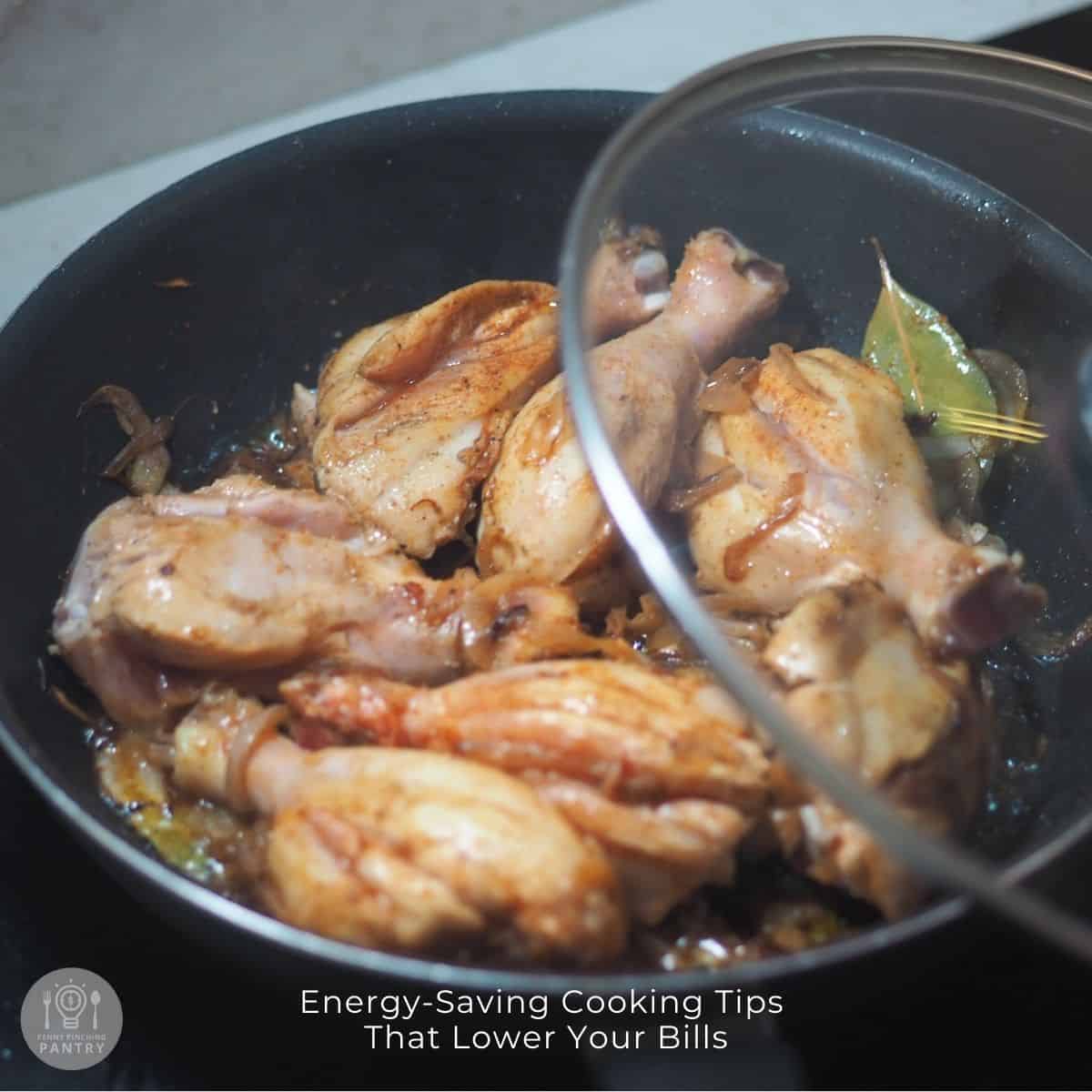
Using a burner that's larger than your pot wastes energy because heat escapes around the sides. Always match the size of your pan to the burner underneath it, and keep lids on whenever possible to trap heat and speed up cooking.
Bonus tip! Flat-bottom pans make better contact with the burner and heat more efficiently than warped cookware.
Kristin's Kitchen Tip
Cooking with lids on your pots and pans helps food cook faster and uses less energy! Trapping heat means lower burner settings and shorter cook times, which quietly saves money every single time you cook.
Skip the Preheat When You Can
Not every recipe actually needs a full oven preheat, even if the instructions say it does.
Casseroles, sheet pan meals, reheating leftovers, and long-cooking dishes can often go straight into a cold oven with no issues. That extra 10 to 15 minutes of preheating adds up over time!
When preheating does matter, like for baking, make sure you're ready to cook as soon as the oven hits temperature so no heat is wasted.
Keep the Oven Door Closed
We've all done it - peeked into the oven multiple times to check on dinner! Unfortunately, every peek lets out a big burst of heat, forcing the oven to work harder to recover.
Use the oven light and window instead, and trust your timer. Your food will cook more evenly, and your oven won't have to burn extra energy to stay hot.
Let Residual Heat Do the Work
One of the easiest energy-saving cooking tips is simply turning things off a little early.
Electric burners, ovens, and even slow cookers hold heat longer than you might expect. Turning them off a few minutes before food is finished allows that leftover heat to finish the job without using extra power.
This works especially well for pasta, rice, soups (like my Easy Crock Pot Chicken Soup), and stews!
Thaw Smart and Prep Ahead
Cooking frozen food straight from the freezer takes more energy and longer cooking times.
Whenever possible, thaw ingredients in the refrigerator overnight or earlier in the day. This shortens cooking time and helps appliances work more efficiently.
Planning ahead even a little can lower both your energy use and your stress level at dinnertime!
Clean Appliances Run Better
It's not the most exciting tip, but it's an important one.
Dirty burners, greasy oven walls, and clogged air fryer vents all make appliances work harder than they should. Keeping things reasonably clean helps heat distribute evenly and improves efficiency.
Even wiping down burners or clearing crumbs from a toaster oven can help more than you'd expect.
Small Changes Add Up Fast
Saving energy in the kitchen doesn't require a total overhaul of how you cook. It's about building better habits that fit into real life!
By choosing efficient appliances, cooking in batches, and paying attention to how heat is used, these energy-saving cooking tips can quietly lower your bills month after month. And the best part is you're still cooking real food for your family, just in a smarter, more budget-friendly way!
Thanks so much for reading! I also invite you to follow me on FACEBOOK, PINTEREST, or INSTAGRAM to keep up with what's going on in my kitchen.
And you might want to check out my Dizzy Busy and Hungry store on Amazon for a whole bunch of great kitchen products I love!
Happy saving!

Comments
No Comments