


The difference between an okay dinner and a memorable one often comes down to something as simple as a sauce. A good pan sauce pulls everything together, giving the meal reason to exist beyond just filling a plate. This article breaks down the small but important details that teach you how to build one from start to finish.
There's also a practical side to pan sauces that often gets overlooked. Making a sauce right in the pan means you're using ingredients you already paid for instead of reaching for a bottled sauce or seasoning packet. The browned bits, a splash of liquid, and a small amount of fat can replace store-bought sauces that quietly add several dollars to a grocery bill. It's a simple habit that makes everyday meals taste better and stretches your food budget further.
Have a question about this article? Ask AI!
Pan sauces are also one of those kitchen skills that quietly save you money over time. When you know how to build flavor from what's already in the pan, you can skip bottled sauces and seasoning mixes and still end up with a dinner that feels finished and intentional.
Jump to:
What a pan sauce is and how it works
Pan sauces are built from what's left behind after you cook something in a pan. Instead of begrudging the browned bits stuck to the bottom of the skillet as a cleaning nuisance, pan sauces utilize their concentrated flavor to create something delicious you can pour over your meal.
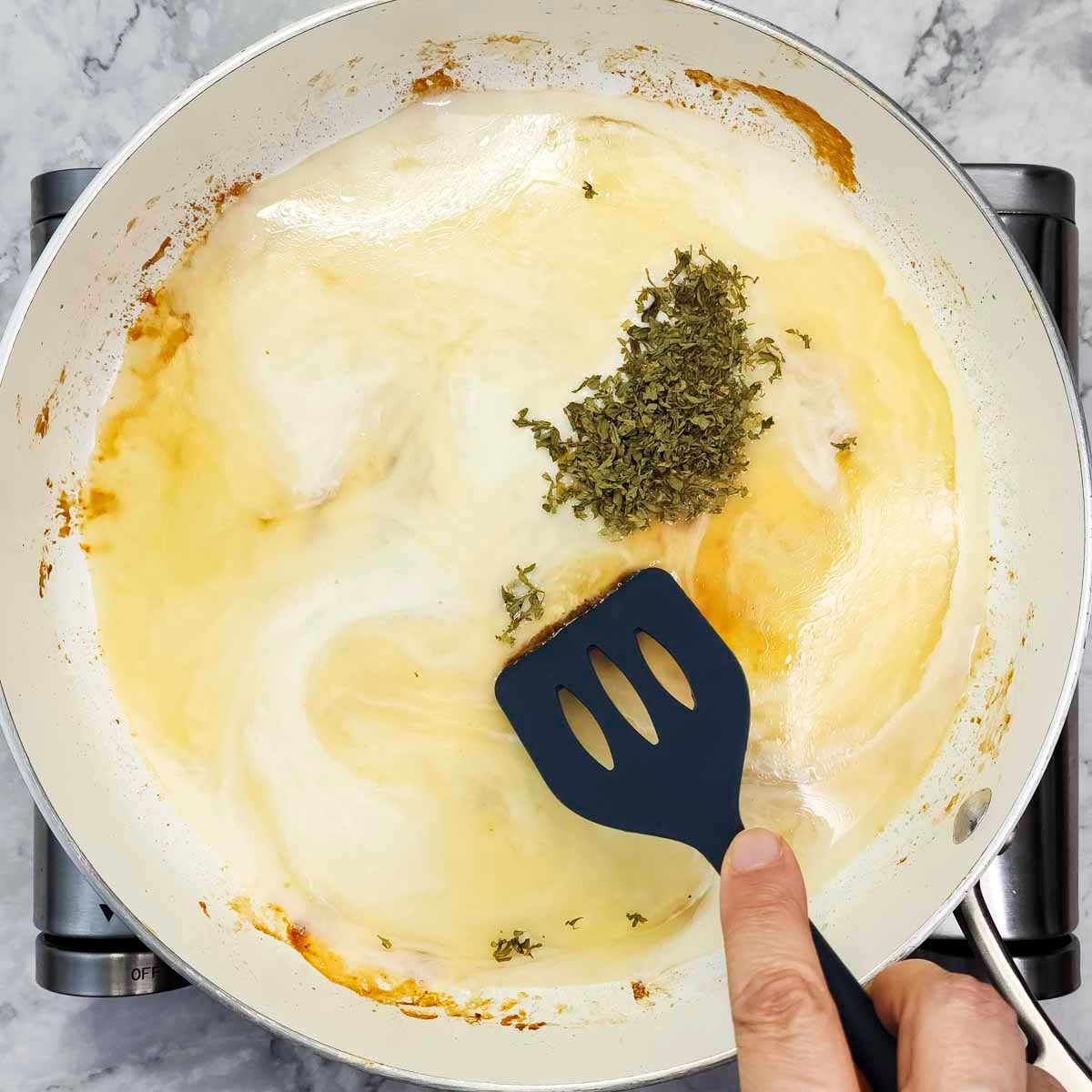
At its core, making a pan sauce is simple. The protein is removed from the pan, liquid is added, a spatula is used to scrape up all the bits, and then fat (like butter or oil) and seasonings are added until it tastes just right. There's no separate pot and no long simmer required. Everything happens fast and in sequence, which is part of the beauty of a pan sauce.
From a budget perspective, pan sauce is about not leaving value behind. Those browned bits are concentrated flavor created from the protein you already bought, and rinsing them down the drain is essentially throwing away part of your meal. Turning them into a sauce takes minutes and eliminates the need for a separate product, an extra pan, or additional ingredients that don't always get fully used.
The best pan sauces are built fast, right in the same pan you cooked in. Those browned bits hold big flavor, and turning them into a sauce takes minutes, with no extra dishes or special ingredients!
Start with proper browning
A pan sauce lives or dies by what happens before the sauce starts. If the protein doesn't brown well, there won't be much to work with later. Pale meat leads to pale flavor, and no amount of liquid will be able to fix that.
Good browning comes from heat and space. The pan needs to be hot enough that the protein sizzles when it hits the surface, and there needs to be room around it. When a pan is crowded, moisture builds up and the food steams instead of browning. That means fewer browned bits and a weaker foundation for the sauce.
Once the protein is cooked, it should come out of the pan and rest somewhere warm. This prevents the meat from overcooking, allowing you to focus on the sauce.
The importance of deglazing
Once the protein comes out of the pan, you're left with heat, fat, and all those browned bits stuck to the bottom. That's where deglazing comes in. Adding liquid loosens those bits and pulls their flavor back into the pan so it can become part of the sauce.
Deglazing also keeps things flexible and affordable. You don't need specialty ingredients to make it work. Water, broth, a squeeze of lemon, or a splash of vinegar all can loosen the pan and build flavor without opening a jar or packet. Once you're comfortable with this step, it becomes easy to skip pre-made sauces altogether and rely on what's already in your kitchen.
Water will work in a pinch, but it won't add much in terms of flavor. Stock, broth, wine, vinegar, or citrus juice are all good options depending on what you cooked. The key is to add the liquid while the pan is still hot, then use a spatula or wooden spoon to scrape up everything stuck to the bottom.
The amount also matters. Too little liquid and the pan will stay dry and scorch. Too much and the sauce turns thin and bland. You want just enough to loosen the browned bits and give them room to dissolve. Once that happens, the sauce will start to take shape, and you can decide what it needs next.
That same quick deglazing step is what brings everything together in dishes like my Skillet Chicken Cordon Bleu, where the pan gets loosened up and turned into a simple sauce that coats the chicken instead of leaving flavor behind.
Fat matters
Once the browned bits are loosened, fat is what pulls the sauce together. Without it, the liquid will taste sharp and unfinished. Fat rounds things out and gives the sauce body so it coats the food instead of running straight off it.
Butter is the most common choice because it softens acidity and adds richness quickly. A small pat goes a long way, especially when it's added at the end. Olive oil, cream, or rendered fat from the protein can work as well, but the goal is the same: to smooth out the sauce, not make it greasy.
Timing is important in this step. If you add fat too early or over high heat, the sauce can break or taste heavy. Pull the pan off the heat or lower it before stirring in butter or cream. When the sauce looks glossy and cohesive, it's perfect.

Balance
Once the sauce comes together, balance is what makes it worth pouring over your meal. A pan sauce needs salt, acid, and fat to work together. Too much of one throws everything off and makes the sauce feel harsh or heavy.
Acid is usually the piece people miss. A small splash of vinegar or citrus at the end can wake the whole thing up and keep it from tasting flat. Salt should be adjusted last, as reducing the sauce concentrates that component. Taste as you go and make small changes instead of guessing in the beginning.
This is also where restraint matters. Not every pan sauce needs garlic, herbs, and extras. Sometimes less is more. A good pan sauce is often one where all the ingredients blend cohesively, and no ingredient sticks out too much over the others.
Kristin's Kitchen Tip
Before you start cooking, keep a small splashable liquid nearby like broth, wine, or even water. When you know a pan sauce is coming, you're less likely to overthink it or skip it at the end!
Aromatics and add-ins
Aromatics can push a pan sauce in a specific direction, but they should be used sparingly. Garlic, shallots, and onions bring a lot of flavor quickly, which means they can also overpower the sauce. These ingredients should go into the pan after the protein comes out, but before too much liquid is added, so they soften without burning.
Herbs work best when added near the end of the process. Fresh herbs lose their punch if they cook too long, while dried ones can turn bitter if they sit in hot fat.
Some add-ins also bring depth and can add complexity without overwhelming the sauce, such as mustard, capers, or a small spoon of miso paste. The goal with a pan sauce isn't to stack as many flavors as possible, but rather to choose one or two elements that support what's already in the pan and stop there.
Reduce or don't reduce
Reduction isn't mandatory. Sometimes the sauce needs a minute to tighten up, and sometimes it's better left loose. If it tastes thin, let it simmer briefly and watch it closely.
A properly reduced sauce should coat a spoon lightly without tasting salty or heavy. If it goes too far, a splash of liquid will fix things.
Match the sauce to what you cooked
Not every pan sauce works with every protein. Chicken and pork can handle brighter sauces with wine or citrus, while steak tends to do better with richer options built on butter or stock. Fish should pair with something lighter since heavy fat or aggressive acid can overwhelm it easily.
You can see how effective this is in my Pan Fried Chicken Thighs with Green Beans, where a splash of liquid lifts the browned bits and turns them into a light pan sauce that flavors both the chicken and the vegetables in one go.
How to fix common pan sauce problems
If a pan sauce tastes flat, it usually needs acid or salt, not more time. Add a small splash or pinch, taste, and adjust.
If it tastes too sharp or salty, fat is often the answer. A small pat of butter or a drizzle of oil can smooth things out. When a sauce breaks or looks separated, lowering the heat and stirring gently usually brings it back together. If the browned bits taste burnt, though, it's better to stop and start fresh than to force it.
Learning how to make a pan sauce is one of those skills that quietly saves money over time. It helps cheaper cuts of meat feel complete, reduces reliance on packaged sauces, and makes better use of what's already in the pan. When you can turn a simple chicken thigh or pork chop into a finished dish without buying anything extra, that's where small savings start to add up.
How pan sauce pulls it all together
A pan sauce can tie the whole meal together. Paying attention to browning and heat, and figuring out the balance of flavors at the end is all that's required to make a decent dinner a great one. Even fast weeknight meals benefit from this technique, like these 20 minute Pan Fried Chicken Tenders, where deglazing adds real flavor without slowing dinner down or dirtying another pan.
This article originally appeared on Food Drink Life.
Thanks so much for reading! I also invite you to follow me on FACEBOOK, PINTEREST, or INSTAGRAM to keep up with what's going on in my kitchen.
And you might want to check out my Dizzy Busy and Hungry store on Amazon for a whole bunch of great kitchen products I love!
Happy saving!

Comments
No Comments