

Have you ever stood in the grocery aisle, staring at two seemingly similar products, trying to figure out which one is actually the better deal? One might be a smaller size at a lower sticker price, while the other is larger but costs more overall.
It can feel like a guessing game, and that's exactly where the magic of unit pricing comes in!

Have a question about this article? Ask AI!
Unit pricing is a simple, often overlooked detail on the shelf tag that instantly tells you the true cost of an item per standard unit of measurement - whether that's per ounce, per pound, per count, or per sheet. Once you know how to spot it and use it, you'll stop paying more than you should, every single time.
So, how do you actually harness this money-saving power? It all starts with knowing exactly what unit pricing is and where to find it.
Jump to:
What Is Unit Pricing?
Think of it this way: instead of just seeing that a small bag of chips costs $2.00 and a large bag costs $3.50, unit pricing breaks it down. For example, it might show you that the small bag is $0.25 per ounce, while the large bag is $0.20 per ounce. Even though the larger bag has a higher total price, its lower unit price tells you it's the better value per amount of product you're getting.
Grocery stores are required in many places to display unit prices, usually on the bottom of the shelf tag right next to the item's total price. It often looks something like '$0.20/oz' or '$3.50/LB' or even '$0.10/CT.'
The greatest power of unit pricing lies in its ability to instantly reveal the true cost of an item per standard measure. This means you can easily compare different sizes or brands and always grab the best deal, putting unit pricing tips directly into action for your budget!
Why Unit Pricing Is Your Best Friend
- Real Savings: This is the big one! Unit pricing reveals which size or brand is genuinely cheaper. That "sale" item might not be a better deal per ounce than the regular-priced larger size.
- No More Guesswork: You don't need to do the math in your head. The store often does the calculation for you, making comparisons instant and easy.
- Smarter Choices: It helps you decide if buying in bulk truly saves money, or if that giant box of cereal is actually a worse deal than two smaller ones.
- Fair Comparisons: You can compare different brands of the same product, or even different forms (like dried beans versus canned beans, if they share a common unit of measure).
Unit pricing is also your best tool to ensure you're getting the absolute lowest price on your budget-friendly kitchen staples, from flour and sugar to canned goods and rice.
How I Use Unit Pricing to Save
I make scanning the unit price a habit, especially for frequently purchased items or when there are multiple sizes or brands available. Here are some real-world scenarios where it helps me save:
- Canned Goods: When buying canned vegetables or beans, I always check the unit price per ounce. Sometimes, buying two smaller cans is actually cheaper per ounce than one large can, or vice versa!
- Paper Products: Toilet paper and paper towels are notorious for tricky packaging. Unit pricing (often per sheet or per square foot) cuts through the marketing fluff to show the real value.
- Cereals & Snacks: Large boxes seem like a good deal, but sometimes store brands or smaller, more concentrated versions have a lower unit price.
- Bulk Bins vs. Packaged: For items like rice, oats, or nuts, I compare the unit price of the bulk bin item (if available) against its packaged counterpart. You might be surprised at the savings! This is especially crucial when considering if buying in bulk truly offers the savings you expect.
- Produce: Sometimes, a bag of apples has a lower unit price per pound than individual apples, or vice-versa, depending on the week's sales. Always check!
Kristin's Kitchen Tip
Don't forget about "per serving" costs, especially for items like frozen meals or pre-portioned snacks! While not a true unit price, dividing the total cost by the number of servings listed can give you a similar per-portion value, helping you decide if that convenience is truly budget-friendly.
A Few Things to Watch Out For
While unit pricing is incredibly helpful, there are a couple of small caveats:
- Inconsistent Units: Sometimes, stores might list similar items with different units (e.g., one olive oil in fluid ounces, another in milliliters). This can make direct comparison tricky, but usually, the dominant unit is consistent.
- Quality vs. Price: Remember that the cheapest unit price isn't always the best value if the quality isn't what you need or prefer. Sometimes, paying a tiny bit more per unit for a product you truly enjoy or trust is worth it.
- Sales vs. Unit Price: Always check both! A great sale might make an item's unit price even lower than its usual best value, but don't assume.
How to Calculate Unit Price Yourself
There may be times when the shelf tag is missing the unit price, or you're looking at a markdown and the store hasn't updated the unit price to reflect the new, lower cost. Luckily, the math isn't hard to do:
Total Price ÷ Quantity = Unit Price
- Total Price: This is the current price of the item you see on the tag, or the new markdown price.
- Quantity: This is the total amount of the product in the package. Look for the net weight (oz, lb, g, kg), fluid ounces (fl oz, mL), or the count (CT) if it's for individual items (like paper towels sheets or snack bags).
Example 1: Missing Unit Price on Canned Tomatoes
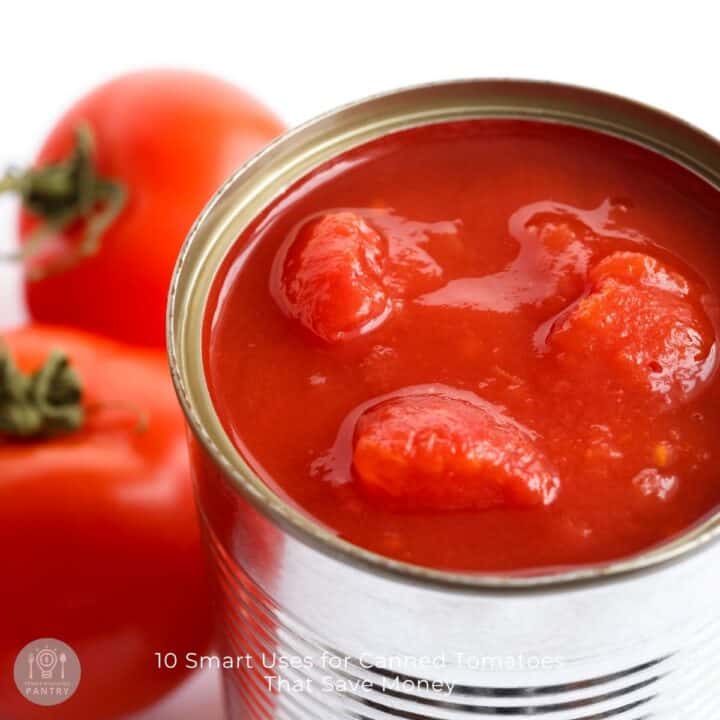
You see a 28 oz can of crushed tomatoes for $1.99. The unit price isn't listed.
- Total Price: $1.99
- Quantity: 28 oz
- Calculation: $1.99 ÷ 28 oz = $0.071 per ounce
Example 2: Markdown on Yogurt
A 32 oz tub of Greek yogurt is usually $4.99, but it's marked down to $3.50 because it's close to its sell-by date. The shelf tag still says "$0.15/oz" (based on $4.99).
- New Total Price: $3.50
- Quantity: 32 oz
- Calculation: $3.50 ÷ 32 oz = $0.109 per ounce (round to $0.11)
Now you know the true markdown unit price is actually about $0.11/oz, and you can compare this unit price to other brands of yogurt. Sometimes, even with a sale price on one brand, there is another brand where the regular price is still a better deal!
It's a good idea to use the calculator on your phone for these quick calculations. Doing this extra step for markdowns or missing tags ensures you're always getting the absolute best value for your money!
After you've used these unit pricing tips to snag a fantastic deal, make sure your investment lasts by checking out my best budget-friendly food storage ideas to keep everything fresh and prevent waste!
Final Thoughts
Making unit pricing a regular part of your grocery shopping routine is a small change that can lead to big savings over time. It transforms you from a casual shopper into a savvy budget master, ensuring every dollar you spend is truly well spent. So next time you're at the store, take an extra second to look for that little number on the shelf tag - it's your secret to penny-pinching success!
Thanks so much for reading! I also invite you to follow me on FACEBOOK, PINTEREST, or INSTAGRAM to keep up with what's going on in my kitchen.
And you might want to check out my Dizzy Busy and Hungry store on Amazon for a whole bunch of great kitchen products I love!
Happy saving!

Comments
No Comments