


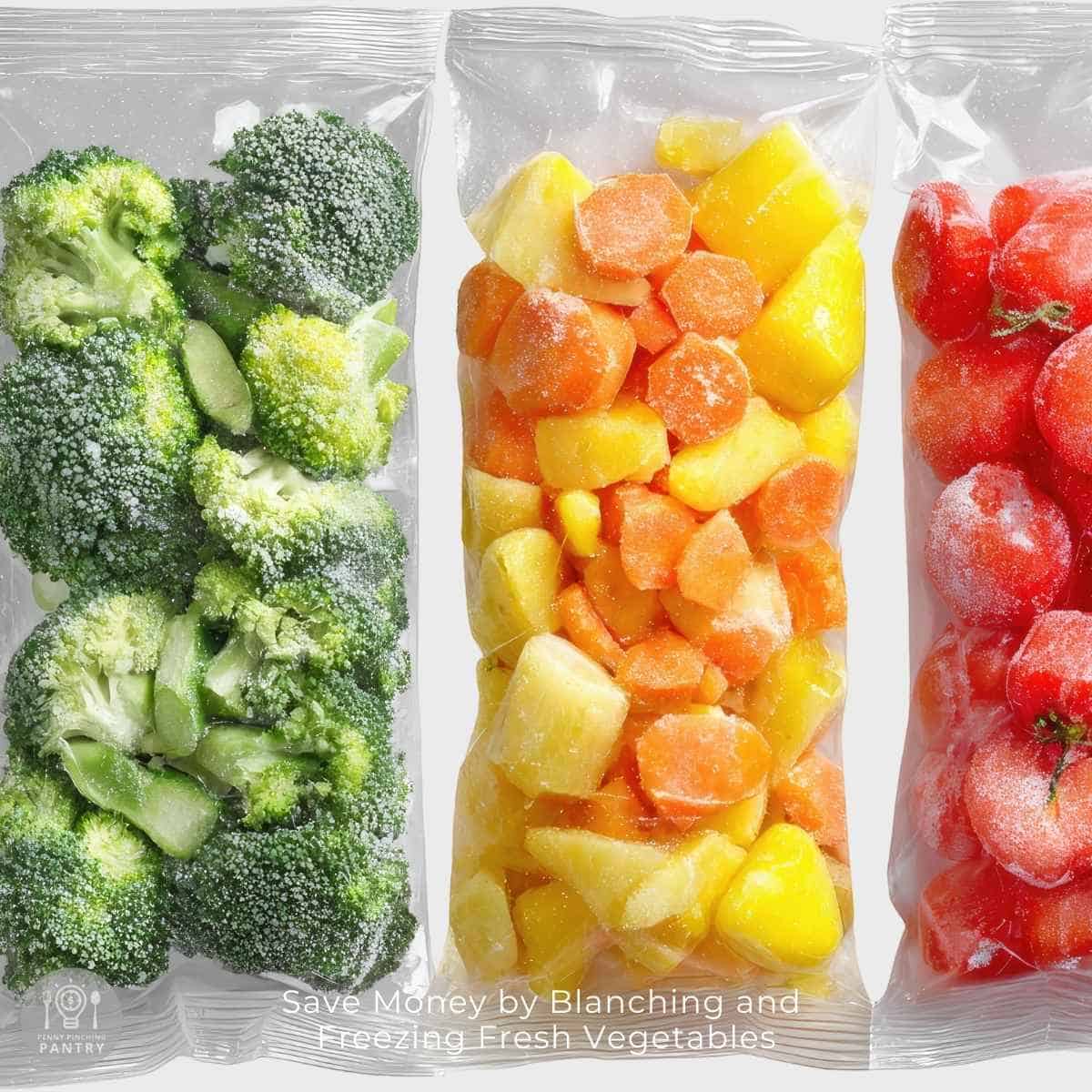
Blanching and freezing fresh vegetables is one of the easiest ways to save money on groceries without changing how you cook or eat.
By taking a little time to preserve vegetables before they go bad, you can cut down on food waste, stretch your grocery budget, and keep ready-to-use ingredients stocked in your freezer for busy nights. It's a simple, old fashioned kitchen habit that still makes a big difference for real-life cooking today!
Have a question about this article? Ask AI!
If you've ever tossed a bag of slimy broccoli or forgotten zucchini hiding in the back of the refrigerator, you're not alone. Fresh vegetables are one of the biggest sources of food waste in busy households, and all that wasted produce is basically money straight into the trash.
One of the simplest ways to stop that from happening is blanching and freezing vegetables. It sounds a little old school, but trust me, this is one of those kitchen habits that quietly saves you money week after week!
With just a little prep time, you can preserve fresh vegetables at their peak and have ready-to-use veggies waiting in the freezer for soups, casseroles, skillet meals, and quick weeknight dinners.
Jump to:
- Why Blanch Those Veggies
- When Blanching and Freezing Saves the Most Money
- Vegetables That Freeze Especially Well
- How to Blanch and Freeze Vegetables Without Stress
- Blanching Times for Common Vegetables
- How Long Frozen Vegetables Last
- Budget Bonus Tips to Make It Even Easier
- Why This Strategy Is Worth It
- 💬 Reviews and Comments
Why Blanch Those Veggies
Blanching is a quick process where vegetables are briefly boiled and then immediately cooled in ice water. This step stops enzyme activity that causes vegetables to lose flavor, color, and texture over time.
Skipping blanching can lead to frozen vegetables that turn mushy or taste flat. Taking a few extra minutes up front means your frozen veggies will taste fresher and last longer.
Blanched and frozen vegetables are perfect for fast meals like soups, casseroles, and skillet dinners, including favorites like my Instant Pot Lentil Soup or my Carrot and Lentil Soup, where frozen vegetables work beautifully.
When Blanching and Freezing Saves the Most Money
This method really shines when you shop sales or buy in bulk.
If fresh vegetables are deeply discounted, grab extra and freeze them before they go bad. You can also use this strategy when you get too much produce from a Community-Supported Agriculture (CSA) box, a garden harvest, or even an over-enthusiastic grocery trip.
Instead of feeling pressured to use everything immediately, you're turning fresh vegetables into a long-term backup plan.
Vegetables That Freeze Especially Well
Not every vegetable freezes beautifully, but many everyday favorites do.
Great options include broccoli, cauliflower, green beans, carrots, bell peppers, peas, corn, zucchini, and spinach. These are the same vegetables you'd normally buy frozen at the store, but freezing them yourself is often cheaper and gives you more control over portion sizes.
How to Blanch and Freeze Vegetables Without Stress
You don't need fancy equipment or a full afternoon to make this work.
Bring a large pot of water to a boil and salt it lightly (optional). Add vegetables and cook just until tender crisp, usually one to three minutes depending on the vegetable. Transfer immediately to a bowl of ice water to stop the cooking. Drain very well.
Spread the vegetables in a single layer on a baking sheet and freeze until solid. Once frozen, transfer to freezer bags or containers and label with the date.
Freezing on a baking sheet first prevents clumping so you can grab only what you need later.
Blanching Times for Common Vegetables
Different vegetables need different blanching times. Here's a quick reference guide:
- Spinach and other leafy greens - 1 to 2 minutes
- Broccoli florets - 3 minutes
- Cauliflower florets - 3 minutes
- Green beans (whole) - 3 minutes
- Carrots (sliced) - 2 minutes; whole baby carrots - 4 to 5 minutes
- Bell peppers (strips or rings) - 2 to 3 minutes (or freeze raw)
- Peas (sugar snap or snow peas) - 2 minutes
- Corn kernels off the cob - 4 minutes; corn kernals on the cob - 7 to 11 minutes depending on size
- Zucchini and summer squash (sliced) - 2 to 3 minutes
- Asparagus - 2 to 4 minutes depending on thickness
Start timing as soon as the vegetables go into the boiling water. If you're blanching different sizes (like thick vs. thin asparagus), blanch them separately for best results.
How Long Frozen Vegetables Last
Properly blanched vegetables can last eight to twelve months in the freezer. They're best used in cooked dishes like soups, stir fries, casseroles, pasta dishes, and skillet meals.
Frozen vegetables won't have the same crunch as fresh, but for everyday cooking, they're incredibly convenient and reliable.
They work especially well in some of my slow cooker recipes, like my Slow Cooker Hawaiian Chicken (frozen bell peppers and onion) or my Crock Pot Beef and Broccoli (frozen broccoli).
If you're already prepping vegetables for the freezer, this is also a great time to think about root-to-stem cooking, since blanching extra stems and greens helps you use more of what you buy instead of tossing it.
Budget Bonus Tips to Make It Even Easier
Freeze vegetables in recipe-sized portions so nothing goes to waste.
Keep a running list of what's in your freezer so you don't accidentally buy duplicates.
Use frozen vegetables as part of stretch meals where they bulk up soups, sauces, and casseroles without adding much cost.
Pro-Tip: Label Everything Before It Goes in the Freezer
It sounds obvious, but it makes a huge difference later! Write the vegetable name, blanching date, and estimated quantity on the bag or container before filling it. Once bags are frozen and stacked, they all look the same, and guessing can lead to wasted food.
Why This Strategy Is Worth It
Blanching and freezing vegetables is one of those quiet kitchen wins. It helps you waste less, shop smarter, and keep easy ingredients on hand for busy nights.
Once you get the hang of it, blanching and freezing fresh vegetables just becomes part of your normal kitchen rhythm. It saves money, cuts down on waste, and makes weeknight cooking so much easier, which is always a win in my book!
Thanks so much for reading! I also invite you to follow me on FACEBOOK, PINTEREST, or INSTAGRAM to keep up with what's going on in my kitchen.
And you might want to check out my Dizzy Busy and Hungry store on Amazon for a whole bunch of great kitchen products I love!
Happy saving!


Comments
No Comments