

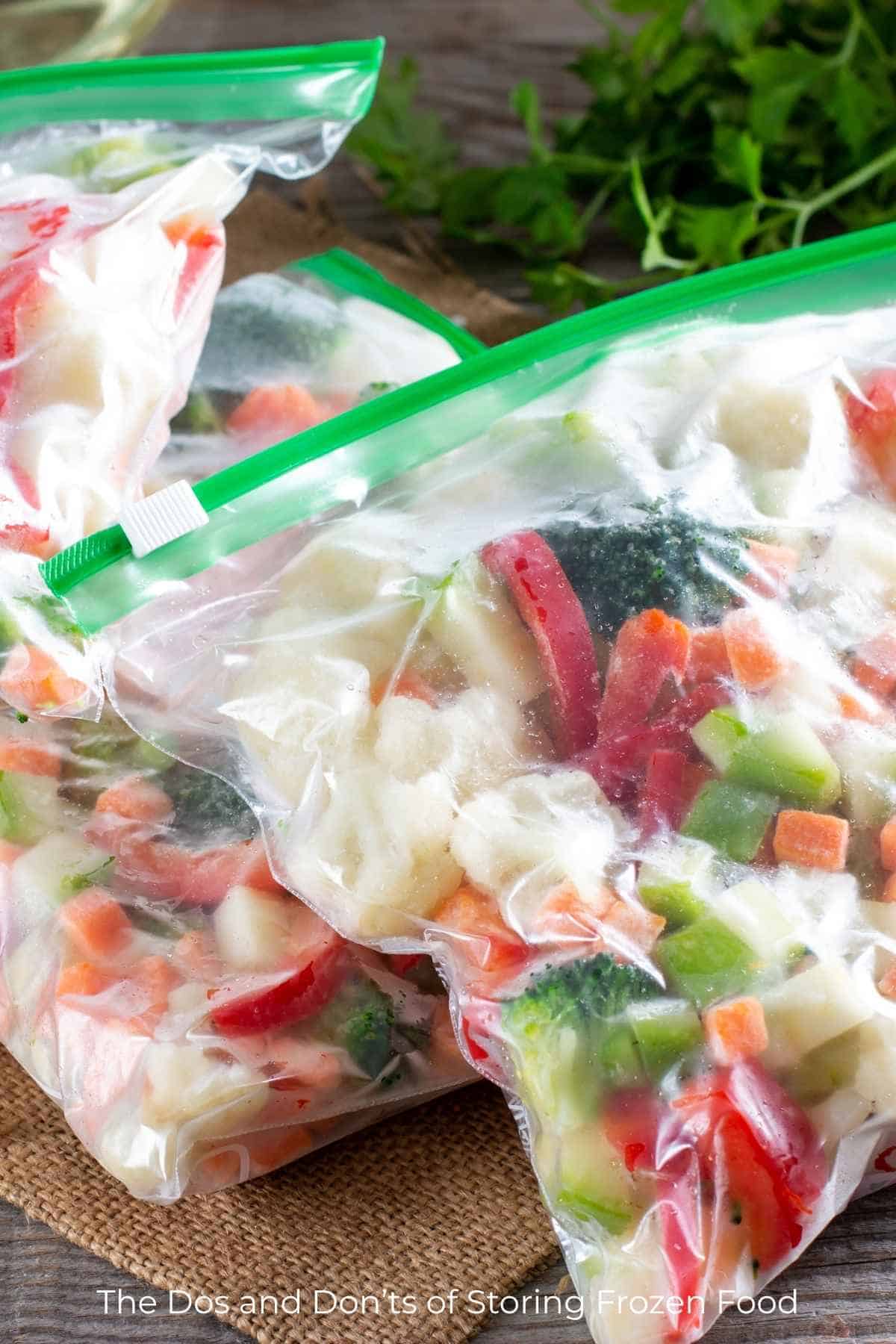
Make storing frozen food work for you. From labeling your containers to avoiding packing your freezer, these simple dos and don'ts ensure that your frozen foods are always ready for effortless weekday meals.
Have a question about this article? Ask AI!
Proper storage of frozen food doesn't have to be complicated. With a little planning and attention to detail, you can save money, maximize freshness, minimize waste, and make mealtime a breeze. Here are some helpful tips for quick and stress-free dinners.
Jump to:
Do: Label and organize your freezer
Have you been wondering how to use frozen cauliflower rice that's been in your freezer for ages? Are you sure it's cauliflower? Avoid the freezer guessing game by keeping your frozen food organized.
Proper labeling and organization are key to keeping frozen foods fresh and accessible. "For me, the biggest win with frozen food is labeling everything," shares Bitty of Eighty Recipes. "I can't tell you how many times I've found a mystery container buried in the freezer and had to play the 'Is this soup or pasta sauce?' game. Now I slap on a label with the name and date - future me is always grateful."
Use airtight containers or freezer-safe bags to prevent air from seeping in and causing freezer burn. Clearly label each item with the contents and the date it was frozen. Group similar items, like vegetables, meats, or prepped meals, in designated sections to make finding them a breeze. Rotating your stock is also important - place newer items in the back and older ones up front so nothing gets forgotten. A well-organized freezer not only saves time but also reduces food waste.
(Pssst...if you're looking for clever ways to use up your frozen chicken, consider whipping up a batch of One Pan Mango Salsa Chicken And Butter Beans for a flavorful and easy weeknight meal.)
Don't: Freeze food past its prime
There are many ways to save money with frozen food, but proper timing is essential. Freezing doesn't reverse spoilage, so make sure to always freeze food at its freshest to preserve its best flavor and texture. For example, I mash or puree avocados when they're ripe before freezing or turn them into four-ingredient guacamole when they're at their prime to prolong their shelf life.
You can't freeze leftovers nearing their expiration date because they won't result in meals you'll want to eat later. Cooked meals should also be frozen immediately after preparation to ensure they taste just as good when reheated.
Avoid treating your freezer as a last resort for food on the verge of going bad. Make it a point to consume food and food items before they start to decline.
Don't treat your freezer as a graveyard for food nearing its expiration date! Freezing doesn't magically reverse spoilage. For the best flavor and texture, always freeze food when it's at its freshest.
Do: Freeze food in portions
Freeze food in manageable portions to simplify meal prep and avoid unnecessary thawing. Divide soups, sauces, and leftovers into individual servings before freezing. This makes it easy to defrost only what you need, preventing waste and keeping your meals fresher.
Sage Scott from Sage Alpha Gal shares, "As someone who's still getting the hang of life as an empty nester, after cooking for a big family for so many years, I've learned to take my four-to-six-serving recipes and freeze leftovers into single-serving meals. That way, I don't have to cook every night and there's always an assortment of healthy, home-cooked meals for me to grab out of the freezer and pop into the microwave."
Wrap proteins like chicken cutlets or ground beef in individual portions or separate pieces with wax paper to avoid freezing them together. Smaller portions also freeze faster, preserving flavor and texture. Remember, reheat only what you'll use to maintain quality.
For more inspiration on delicious, portion-friendly meals, you might enjoy making Slow Cooker Chorizo With Quinoa, which is perfect for freezing into individual servings.
Don't: Overpack the freezer
The more you pack in your freezer, the more efficient, right? Wrong. Overpacking blocks air circulation, leading to uneven freezing and potential spoilage. It also makes it harder to locate items, increasing the risk of forgotten food.
Aim to keep your freezer about 3 quarters full, allowing space for airflow while still being energy efficient. Use up older items and discard anything past its prime to declutter regularly.
Do: Use proper storage techniques
Air is the enemy of frozen food, so proper storage is crucial. There are plenty of budget-friendly food storage ideas to choose from, but when it comes to storing frozen food, choose freezer-safe, airtight containers or vacuum-sealed bags to lock out moisture and air.
"My worst fail with storing frozen food is with glass jars. I once forgot to leave some space for things to expand as it froze, and my delicious soup that I worked so hard on was ruined because the glass shattered," shares Gena Lazcano of Ginger Casa. "For convenience and my sanity, I now store soups in freezer bags. Just lay them flat when freezing so they'll thaw out more easily and uniformly."
Leave room for expansion when freezing soups or stews to prevent containers from cracking. If you have limited space, opt for stackable containers to maximize storage. These techniques help maintain food quality and extend shelf life.
Kristin's Kitchen Tip
Defrost like a pro! Instead of thawing large blocks of frozen food in the microwave, plan ahead and transfer items to the refrigerator the night before. This slow, gradual defrosting helps maintain the food's texture and prevents it from becoming rubbery or dry when reheated.
Don't: Freeze foods with high water content
Not all foods are made for the freezer. Certain types of food, especially those with high water content like lettuce, tomatoes, or cucumbers, don't freeze well. When thawed, they can become soggy or mushy, losing their original texture and flavor.
Have leftovers from a fruit platter you served at a party? Before tossing them in the freezer, make sure they're suitable for freezing. Choose fruits that freeze well and maintain their quality once thawed, such as berries, peppers, and carrots.
For foods like watermelon or oranges, it's best to enjoy them fresh instead of freezing them. Use them for new dishes or as a garnish if you have excess. I use extra orange slices to garnish my favorite homemade drink: slow-cooker mulled wine.
By the way, you can check out my article on how to save money with frozen food for even more budget-saving tips!
Freeze now, feast later
Properly storing frozen food can make a world of difference when it comes to quick and easy dinners. By following these simple dos and don'ts, you'll save time, reduce waste, and always have a delicious meal ready for quick prep and cooking when you need it.
With the right storage techniques, your frozen food stays fresh and flavorful, helping you enjoy more time-saving meals. The little extra effort in organization and timing will pay off when you're able to effortlessly pull out a homemade dinner from the freezer on a busy night. Check out these smart freezer hacks for some great ideas to make the most of your freezer!
With your freezer well-stocked and organized, you'll find it effortless to pull out ingredients for quick and delicious dinners, like this incredibly simple One Pot Chicken and Rice.
Plus, by following these storage tips, you're already on your way to saving money and avoiding some of the most common grocery shopping mistakes!
This article originally appeared on Food Drink Life.
Thanks so much for reading! I also invite you to follow me on FACEBOOK, PINTEREST, or INSTAGRAM to keep up with what's going on in my kitchen.
And you might want to check out my Dizzy Busy and Hungry store on Amazon for a whole bunch of great kitchen products I love!
Happy saving!

Sylvia Tompkins says
I still cook enough for four,there’s only two of us now, and freeze the half away. About once a month we have a week of freezer meals!
Kristin King says
I love when that happens - it gives me a nice break. I like that tip, thanks for sharing! 🙂