


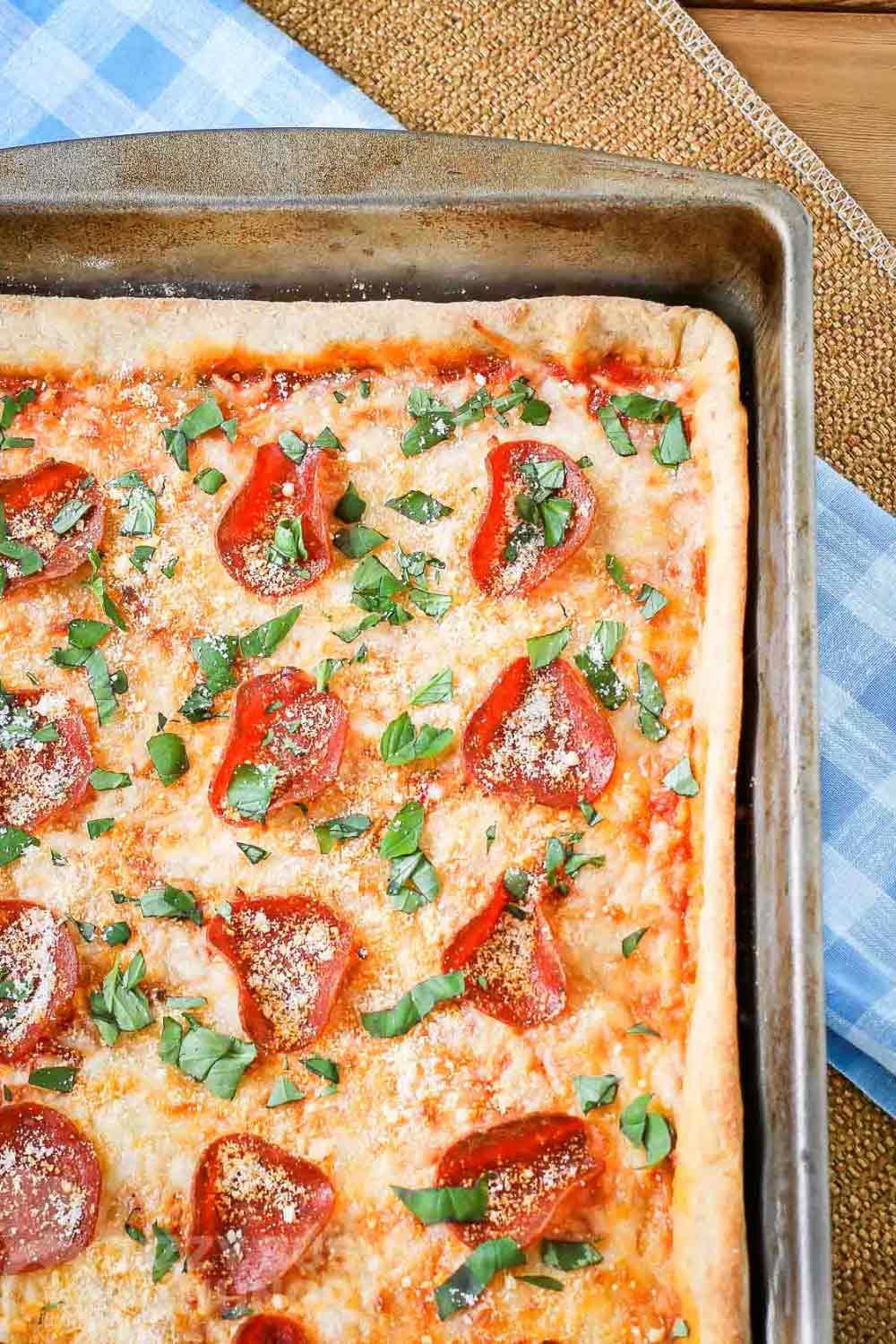
Pizza is a dish that originated in Italy and has become one of the most popular foods worldwide. It is a flatbread topped with tomato sauce, cheese, and other ingredients, such as meats, vegetables, and herbs. Pizza is baked in an oven and served sliced into individual portions.
Making pizza at home is not only fun and delicious, but it can also save you a lot of money compared to dining out or ordering delivery. With just a few basic ingredients, you can create a restaurant-quality pizza for a fraction of the cost.
Have a question about this article? Ask AI!
You can usually find a pizza restaurant in every town - it's hugely popular, and it's not hard to understand why. Quick and easy to make and mouthwateringly delicious, it's a go-to meal for many people.
Pizza is a straightforward dish with a crust, usually topped with a tomato-based sauce, different varieties of cheese, and then toppings including (traditionally) meat, vegetables, and herbs.
But you can make delicious pizza at home, in an outdoor or kitchen oven.
Jump to:
- Making the pizza dough
- How to store pizza dough
- How to make pizza sauce
- How to make a tomato-based pizza sauce
- Pizza Toppings Ideas
- Tips for creating your own pizza toppings
- Layering pizza toppings
- The best pizza cheese
- The best cheese to use for different pizza styles
- Baking your homemade pizza
- Serving Suggestions
- 💬 Reviews and Comments
Making the pizza dough
See this pizza dough recipe for a complete guide, including measurements.
This pizza dough recipe is made from 5 store cupboard ingredients:
- Flour - 00 pizza flour, bread flour, or all-purpose flour
- Water
- Active dry yeast
- Salt
- Extra virgin olive oil
Step-by-step instructions on how to make pizza dough
Using a stand mixer fitted with a dough hook or a mixing bowl and a rubber spatula, add yeast to a bowl of warm water and whisk.
Then add olive oil, flour, and salt and beat slowly for approximately 2 minutes.
Tip your pizza dough onto a lightly floured work surface, lightly flour your hands, and knead the dough for 4 minutes.
To knead the pizza dough, press the heel of your hand away from you and then fold the dough back over itself.
Rotate the dough 90 degrees and repeat the process. This will help to stretch the gluten strands in the dough, making it more elastic and easier to work with.
Continue kneading the dough for about 5-10 minutes until it becomes smooth and elastic. If the dough feels too sticky, add a little more flour. If it feels too dry, add a little more water.
Use a pizza dough scraper to divide your dough and clean up your work surface.
Once your dough is kneaded, form it into a ball and place it in a lightly oiled bowl.
Cover the bowl with a kitchen towel or plastic wrap and let the dough rise in a warm, draft-free place for at least an hour or until it has doubled.
After the dough has risen, it is ready to be rolled out and topped with your favorite ingredients, then put into a pizza oven to make a delicious pizza!
How to store pizza dough
You can store your homemade pizza dough in the fridge for up to three days. I recommend wrapping it tightly in plastic wrap as it can burst out and the dough becomes stale.
You can also freeze the dough for up to three months. I recommend storing it in portion size so you can grab the right amount of pizza dough whenever you need it without having to use it all.

How to make pizza sauce
The best homemade pizza has a great pizza sauce. These are some of the most popular sauces:
- Tomato-based sauce
- White sauce
- BBQ sauce
- Pesto sauce
How to make a tomato-based pizza sauce
See this delicious homemade pizza sauce recipe for ingredient measurements.
You'll need these ingredients to make the sauce:
- Crushed tomatoes - San Marzano Italian tomatoes are best, as they are sweeter
- Chopped onion
- Fresh garlic
- Italian seasoning
- Red pepper flakes
- Salt & pepper
Add olive oil, garlic, tomatoes, Italian seasoning, red pepper flakes, salt, and pepper to a pan over medium heat, bring to a simmer, and then simmer for 45 minutes.
Remove the tomato mixture from the heat and let it cool. Once cool, add to a food processor or blender and blitz until the sauce is smooth.
Use immediately or store in an airtight container in the fridge for up to three days.
For a super easy way to season your pizza sauce, use this Homemade Pizza Seasoning! You can learn how to create other DIY pantry staples as well for the best tasting seasonings, condiments, sauces, and dressings!

Pizza Toppings Ideas
There are many popular pizza toppings, including;
- Cheese
- Pepperoni - veggie pepperoni is a great option for vegetarians
- Mushrooms
- Peppers
- Onions
- Olives
Choose your favorite pizza toppings - the foods you love.
Tips for creating your own pizza toppings
When creating your perfect pizza, choose ingredients that complement each other.
For example, in a Margherita pizza, the tomatoes' sweetness complements the cheese's creaminess, and the basil adds a fresh herbal note.
For something a little different, try this Crab Bacon Spinach Pizza, this Bacon Pizza with Caramelized Onion, or this Curry Pizza with Veggies. Yum!
Layering pizza toppings
Start with the sauce: Begin by spreading a thin layer of pizza sauce on the crust. This will help the toppings stick to the pizza and keep them from sliding off.
Use cheese as a base: Add a layer of cheese on top of the pizza sauce. This will help hold the other toppings in place; it creates a gooey, melty layer as it bakes.
Layer the vegetables: Add your vegetables on top of the cheese layer to prevent them from burning and allow them to cook evenly.
Add (veggie) meats or proteins: If you're using (veggie) meat or protein, add it to the vegetables. This will prevent the meat from burning and allow it to cook evenly.
Add more cheese: Add another layer of cheese on top of the toppings to hold the toppings in place and create a delicious, gooey, cheesy layer.
Use small pieces: Chop toppings into small pieces to ensure they cook quickly and evenly and stay in place.
Spread toppings evenly: Be sure to spread the toppings out evenly to ensure they cook evenly and don't burn in one spot. It'll also be much tastier when it's sliced up.
Don't overload: Avoid overloading the pizza with too many toppings. Your pizza will be challenging to cook and may have a soggy crust.
Top with fresh herbs: After your pizza is cooked, add a sprinkle of fresh herbs like fresh basil or oregano on top. This will give an extra burst of flavor and freshness to your pizza.
Want to save money on pizza night but just don't have the time or energy to make your own homemade pizza? Save money on pizza night without the hassle of having to start from scratch with my frozen pizza hacks!
The best pizza cheese
- Mozzarella cheese
- Parmesan
- Provolone - not suitable for vegetarians
- Cheddar
- Gouda - be careful to buy the vegetarian version if needed
- Ricotta
- Fontina
- Pecorino Romano - choose a vegetarian Italian hard cheese alternative
The best cheese to use for different pizza styles
Thin crust pizza: Thin crust pizzas need a cheese that melts quickly and evenly. Some of the best cheeses for thin-crust pizza include fresh mozzarella, grated Parmesan cheese, fontina, and provolone.
Deep dish pizza: Deep dish pizzas need a cheese that can withstand a long cooking time without burning or becoming too oily. Some of the best cheeses for deep-dish pizza include shredded mozzarella, grated Parmesan cheese, and provolone.
Neapolitan pizza: Neapolitan pizza needs a cheese that is creamy and slightly tangy. The traditional cheese used in Neapolitan pizza is buffalo mozzarella, which is rich and creamy with a tangy flavor. Other good options include provolone, Asiago, and Pecorino Romano.
Sicilian pizza: Sicilian pizza needs a cheese that can withstand the thick crust and hearty toppings. Some of the best cheeses for Sicilian pizza include grated Parmesan cheese, shredded mozzarella, provolone, and Pecorino Romano.
Overall, the best type of cheese for any pizza complements the other ingredients and adds to the overall flavor profile of your homemade pizza.
We suggest experimenting with different cheeses to find the perfect combination for your favorite pizza recipe.
If you love pizza, you'll want to check out this collection of 35 creative pizza recipes I put together! So many great ideas, all in one post!
Baking your homemade pizza
You can cook your pizza in an outside pizza oven or a kitchen oven.
A pizza oven will cook the pizza quickly and give you that beautifully charred crust you see at pizzerias.
How to Bake Pizza in a Pizza Oven
Pizza ovens can reach very high temperatures; timings may vary for different brands.
Timings also vary depending on the type of toppings.
If you are baking a pizza Margherita, Neapolitan pizza, or marinara pizza, you only need to bake it in the pizza oven for 2 to 3 minutes at 850°F/450°C.
Pizzas such as veggie pizza, tomato pizza, or spinach pizza will take slightly longer.
Use a peel to turn your pizza every 20 seconds to ensure a perfectly even cook.
When the pizza is cooked, the crust will be charred, the cheese melted, and the toppings perfectly cooked.
Kristin's Kitchen Tip
Did you know? You can also use your slow cooker to cook your pizza! Check out this Crock Pot Pizza recipe to find out how!

How to Bake Homemade Pizza in an Oven
Preheat your oven to 500°F/260°C. If using a pizza stone, place the stone in the oven to preheat as well.
If baking a pesto pizza, cheese pizza, or white pizza, you'll only need to cook it for 8 to 10 minutes.
It may take longer if you're cooking an olive pizza, vegan pizza, or mushroom pizza.
Watch your pizza closely; I recommend turning it halfway through to ensure an even cook.
When the pizza is done, the crust will be golden brown, the cheese melted, and the toppings perfectly cooked.
If you have leftovers, you can reheat pizza in an air fryer.
And that is how easy it is to make homemade pizza! The more you practice, the better you will get at it.
Try my pizza recipes or experiment with creative flavors, and you'll soon enjoy the perfect pizza in your home.
Serving Suggestions
Serve your pizza with a nice salad on the side, like this Kale Caesar Salad or this refreshing Cucumber Salad.
Or pair with freshly baked crusty bread, like my Slow Cooker Bread with Garlic and Parmesan or my Slow Cooker Olive Bread!
Mandy is the enthusiastic creator of the vegetarian website Splash of Taste; she makes meat-free cooking fun and easy. When Mandy's not cooking and writing, you'll find her travelling, exploring countries and cuisines, and spending time with her chihuahua. Download her free 5 x Easy Vegetarian Meals eBook.
This article originally appeared on Splash of Taste.
Thanks so much for reading! I also invite you to follow me on FACEBOOK, PINTEREST, or INSTAGRAM to keep up with what's going on in my kitchen.
And you might want to check out my Dizzy Busy and Hungry store on Amazon for a whole bunch of great kitchen products I love!
Happy saving!

Comments
No Comments